Poetry · Spirituality

‘The Guest House’, by Rumi

This being human is a guest house.
Every morning a new arrival.

A joy, a depression, a meanness,
some momentary awareness comes
as an unexpected visitor.

Welcome and entertain them all!
Even if they’re a crowd of sorrows,
who violently sweep your house
empty of its furniture, still,
treat each guest honorably.
He may be clearing you out
for some new delight.

The dark thought, the shame, the malice,
meet them at the door laughing
and invite them in.

Be grateful for whoever comes,
because each has been sent
as a guide from beyond.

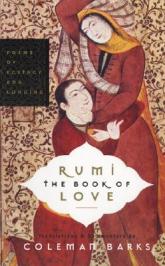
From Rumi, The Book of Love: Poems of Ecstasy and Longing

Best Reads 2013 · Poetry · Spirituality

Best Reads 2013. VI: Rumi, The Book of Love: Poems of Ecstasy and Longing

Rumi, The Book of Love: Poems of Ecstasy and LongingThis book, indeed Rumi generally, has been a revelation to me. As I have said elsewhere, I had come across him several times in the writings of Richard Rohr and others, but it was only when a woman I met at a conference recommended him with the greatest enthusiasm that I ordered my first book of Rumi poems. It happened to be this one.

This collection has been put together and translated by Coleman Barks, who has given us highly readable texts rendered in beautiful English (on Barks as a translator of Rumi’s poetry, see my earlier post And so I’m hooked. Rumi (as mediated by Coleman Barks)’). The book is divided into twenty-two chapters, each of which features an introduction by Barks. There is also an opening introduction and a brief account of the life of Jelaluddin Rumi (1207–73).

Rumi’s poems are an expression of medieval Sufist spirituality, albeit as mediated and adapted by Barks, and so it should come as no surprise that some of it feels foreign to novices like myself. It is foreign, after all! That said though, some passages have touched me in ways I have perhaps never been touched before.

How can I possibly describe its impact on me? I would have to talk about its sheer, breathtaking beauty; its role in expanding my thought, stirring my passion, offering consolation; above all perhaps, its deep and utterly compelling wisdom. But let me give you some further examples, in addition to the ones I have already provided in earlier posts.

Having gone through a prolonged period of intensely-felt grief, I have found Rumi’s thoughts on grief and pain, longing and healing illuminating, consoling and quite simply to be full of wisdom:

The cure for pain is in the pain.

Hold on to your particular pain.
That too can take you to God.

The grief you cry out from
draws you toward union.

I’ve broken through to longing now,
filled with a grief a have felt before,
but never like this.

There’s a shredding that’s really a healing,
that makes you more alive!

Holding on to my pain, not running away from it, not denying it, resisting the urge to move on has been a source of profound blessing. The cure for pain is indeed in the pain in that it generates that longing that draws us toward union, as Rumi says, that longing that can take us to God. A shredding is not what I had been expecting, but strangely enough it has made me more alive.

Rumi on thinking:

… Leave thinking to the one
who gave intelligence. Stop weaving,

and watch how the pattern improves.

How I wish I had come across that advice some time ago, but even if I had, would I have been able to leave well alone? It is so true though. Our weaving does not do any favours to the pattern.

And on jealousy:

If you could untie your wings
and free your soul of jealousy,

you and everyone around you
would fly up like doves.

How true!

This is a beautiful collection of poems, full of deep wisdom and insight. It is a book that I will be returning to time and again. Who knows, perhaps some of the more mysterious sections will over time divulge their deep secrets to me as well.

Biblical Studies

Why I read the Song of Songs I

So why do I read the Song of Songs, or more to the point, why am I spending so much time with it? Having raised the question a little while ago, I am conscious that I still owe an answer. Or maybe several.

Here’s my first, which is probably self-evident. Then again, it doesn’t seem to be, at least not to most people. As a Christian, one might have thought that the book being part of the Bible would be reason enough to read it. Sadly, that is not, or perhaps it’s best to say no longer, the case. Having been one of the most read, preached and commented upon books of the Bible in medieval times, the Song of Songs features hardly at all in contemporary Christianity and spirituality.

It is easily demonstrated that the decline of the Song’s popularity began precisely at the point when it was increasingly recognised that it celebrates human love and sexuality rather than being concerned primarily, or even exclusively, with spiritual matters (of course, this is not to deny that there is a deeply spiritual side to our sexuality).

So does the Song of Song’s celebration of human love and sexuality (and the body!) lessen its relevance and importance? I would have thought not. Quite the opposite. But that is a different matter that I shall have to come back to some other time.

For the time being, my first answer is quite simply that I read the Song of Songs because it’s in the Bible.

Poetry · Spirituality

Stay bewildered inside God

Here’s a slightly longer excerpt from another Rumi poem, ‘The Basket of Fresh Bread’ (published in The Book of Love: Poems of Ecstasy and Longing). Some of Rumi’s poetry, which I discovered only recently, resonates very deeply with me and reinforces my journey into silence and contemplation.

Don’t look for it outside yourself.
You are the source of milk. Don’t milk others!

There is a fountain inside you.
Don’t walk around with an empty bucket.

You have a channel into the ocean,
yet you ask for water from a little pool.

There is a basket of fresh bread on your head,
yet you go door to door asking for crusts.

Knock on the inner door, no other.
Sloshing knee-deep in fresh riverwater,
yet you keep asking for other people’s waterbags.

Water is everywhere around you, but you see
only barriers that keep you from water.

Mad with thirst, you can’t drink from the stream
running close by your face. You are like a pearl
on the deep bottom wondering inside the shell,
Where’s the ocean?

Stay bewildered inside God,
and only that.

I love the imagery of nourishment and refreshment: water, milk and bread. Nothing spectacular, just staples, the stuff of everyday life, but essential. ‘Staying bewildered inside God’, that’s such an appropriate description of where I have been finding myself for some time now.

Poetry · Spirituality

Rumi on love

Look inside and find where a person
loves from. That’s the reality,
not what they say.

… and remember, the way
you make love is the way God will be with you.

If you want
to be more alive, love
is the truest health.

Lovers don’t finally meet somewhere.
They’re in each other all along.

Rumi, The Book of Love: Poems of Ecstasy and Longing

Biblical Studies · Spirituality

There is no choice then

Love is patient;
love is kind;
love is not envious
or boastful
or arrogant
or rude.

It does not insist on its own way;
it is not irritable or resentful;
it does not rejoice in wrongdoing,
but rejoices in the truth.

It bears all things,
believes all things,
hopes all things,
endures all things.

Love never ends.

These words from Paul’s First Letter to the Corinthians (13:4-8) have to be among the most challenging but also the wisest and truest comments ever made about love, true love, that is, love that fully deserves that name.

In ‘Decreation: How Women Like Sappho, Marguerite Porete and Simone Weil Tell God’, an essay I have referred to before, Anne Carson offers her own reflections on love, self and God in connection with the mysticism of Sappho, Marguerite Porete and Simone Weil. She notes, rightly, I think, that almost everything that passes as love is little more than self-love.

True love is characterised by patience and kindness. It cares for the Other, whoever that Other may be (love does not discriminate between who is, and isn’t, lovable), and does not insist on its own way. It bears, believes, hopes and endures everything; and it never ends. Now that is a challenge!

Yet, says Paul, I can have all knowledge and understanding, all faith even, but if I ‘do not have love, I am nothing’. There is no choice then, is there? It also is the most worthy of goals.