Biblical Studies · Fiction

An evil book? C. J. Sansom on the book of Revelation

Revelation was the first C. J. Sansom book I have read, primarily because the plot is built largely around the seven bowls (or vials, as they are called in the King James Version) of judgement found in Revelation 15–16. I shall say more about the novel in an upcoming post, focusing on some of its comments on the book of Revelation for now. These comments are of particular interest to me, as Revelation is one of the biblical books that I am working on at the moment.

Sansom, a historian by training, has interesting things to say about how the book of Revelation was interpreted during the troublesome times of Henry VIII, in the aftermath of the dissolution of the monasteries and during the bitter conflicts between the radicals (i.e. those influenced by the Protestant reformers) and the conservatives (those wishing to preserve Catholic traditions).

One of the themes that comes up repeatedly in conversations among the novel’s main characters is Revelation’s obscurity. Consider the following conversation between Barak, the assistant of Matthew Shardlake, the book’s protagonist, and the latter himself. They are discussing the seven bowls of judgement:

‘I remember our vicar reading about that once. I couldn’t follow it, it sounded like a mad dream.’
‘A mad dream. Yes, well put. …’

In another conversation they reflect on Revelation generally:

‘This book makes no sense,’ Barak said at length. ‘It tells the same story in different ways, different versions of how the world will end, angels and wars and vials. There is no …’
‘Narrative? I know. It is the only book in the New Testament that is so obscure.’

Indeed, the book’s obscurity is causing all kinds of problems, as Shardlake points out:

There are as many interpretations of Revelation as there are interpreters, each one saying his understanding is the true one. And most are ill-educated fanatics. This book is causing much trouble in the world.

It is Guy Malton, a doctor and ex-monk, who puts his finger on one of the key problems:

Thrown into a different world, where the Bible is interpreted as literal fact, its symbols and metaphors forgotten, and fanatics react with equanimity to the blood and cruelty of Revelation. Have you ever thought what a God would be like who actually ordained and executed the cruelty that is in that book? A holocaust of mankind. Yet so many of these Bible-men accept the idea without a second thought.

But it is not only the interpreters that are at fault. The book of Revelation itself is deemed to be deeply problematic, as both Matthew Shardlake and Guy Malton repeatedly suggest. This is how Shardlake characterises Revelation:

The last book of the Bible; full of wild, fiery, cruel language, hard to understand, unlike anything else in the New Testament. Erasmus and Luther both doubted whether Revelation was really the word of God …

He then goes on to stress how different this book is from the rest of the New Testament, especially ‘in its violence and cruelty, its representation of Jesus as God’s harsh judge, who holds the keys of hell and death’. Indeed, Revelation appals him:

I read its cruel barbarous message and I despair.

Malton, for his part, comments:

What an evil book it is, for it says that humanity is nothing, is worth nothing.

And so he concludes:

Christianity would be better without that book. It preaches nothing but cruelty and destruction. It teaches that the destruction of human beings does not matter, is even to be rejoiced over. It is evil.

That these characters express Sansom’s own views about the book of Revelation is confirmed by the ‘Historical Note’ that concludes the novel. Here Sansom talks about ‘a London increasingly divided between radical and conservative parishes’ and notes that:

the radicals, with their view of themselves as persecuted saints, often comforted themselves in the belief that Revelation foretold their eventual victory against the ‘Beast’ of Rome. Many believed then, exactly as Christian fundamentalists do today, that they lived in the ‘last days’ before Armageddon and, again just as now, saw signs all around in the world that they took as certain proof that the Apocalypse was imminent. Again like fundamentalists today, they looked on the prospect of the violent destruction of mankind without turning a hair. The remarkable similarity between the first Tudor Puritans and the fanatics among today’s Christian fundamentalists extends to their selective reading of the Bible, their emphasis on the Book of Revelation, their certainty of their rightness, even to their phraseology. Where the Book of Revelation is concerned, I share the view of Guy, that the early Church Fathers released something very dangerous on the world when, after much deliberation, they decided to include it in the Christian canon.

Most of what Sansom says, especially about fundamentalist interpretations of Revelation, is very well taken. But his novel also leaves us with the question whether the book of Revelation is indeed evil in and of itself. And that is one of the issues I shall have to ponder in the coming weeks, as I reflect, among other things, on ‘Revelation, Apocalyptic Worldview and Violence’.
Fiction · Spirituality

I miss God

I miss God. I miss the company of someone utterly loyal. … I miss God who was my friend. I don’t even know if God exists, but I do know that if God is your emotional role model, very few human relationships will match up to it. I have an idea that one day it might be possible, I thought once it had become possible, and that glimpse has set me wandering, trying to find the balance between earth and sky.

Thus Jeanette Winterson in Oranges Are Not the Only Fruit, an autobiographical novel that tells the story of Winterson’s painful break with her fundamentalist, pentecostal upbringing.

Fiction

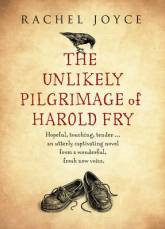
Rachel Joyce, The Unlikely Pilgrimage of Harold Fry

Rachel Joyce, The Unlikely Pilgrimage of Harold FryJoyce’s debut as a novelist tells the story of Harold Fry, a pensioner who, leaving the house one morning in order to post a letter to an old friend, ends up travelling all across England from Kingsbridge in the Southwest to Berwick in the Northeast. This is a book about an old man beginning to come to terms with his life, with mistakes made in the past and the ruins of a marriage that had been dead and loveless for a long time:

… for years they had been in a place where language had no significance.

There was no bridging the gap that lies between two human beings.

However, all this is slowly changing, for Harold’s pilgrimage leads to an awakening, as he becomes more fully aware of the world around him and develops a deep sense of compassion for the people he meets:

It was hard to understand a little and then walk away.

This is a gentle book with deep, yet unobtrusively expressed spiritual truths.

There were times, he saw, when not knowing was the biggest truth, and you had to stay with that.

Not knowing, or better yet, not understanding, indeed so often is the biggest truth and one that we need to learn to stay with, difficult though that can be.

Best Reads 2013 · Fiction

Best Reads 2013. IV: Anne Tyler, The Beginner’s Goodbye

Anne Tyler, The Beginner's GoodbyeYou probably wouldn’t read Anne Tyler for the plots of her novels. It’s not that nothing happens at all, though it would be fair to say that nothing much tends to happen. In any case, the plot is not what makes her books special. So why would you read Anne Tyler? Characterisation, I’d say, it’s all about characterisation.

The Beginner’s Goodbye is a novel about love and loss, grief and also, eventually, hope. When Aaron, an intriguing character, who stammers and suffers from the effects of polio, loses his wife (and house) in a freak accident, he finds his life drained of purpose and meaning.

The story is told from his perspective, the perspective of quite an ordinary kind of guy. And this, for me, is what makes the book special. Tyler deftly avoids the trap that all too many writers have fallen into, of using their characters as mouthpieces for their philosophical reflections, reflections that can easily become too sophisticated for the characters that are made to think and share all those amazing insights. Aaron is not cast in that way. Yes, he does offer us his reflections on life, love, grief and lots of other things (how could he not after all that’s happened to him?), but there is an ordinariness about him that makes him utterly real and believable.

Tyler has once again excelled at characterisation and come up with yet another very gentle book, to mention another one of her trademarks. Here are some of the little gems that Aaron dispenses:

… I had first tried to do without her – to ‘get over’ my loss, ‘find closure,’ ‘move on,’ all those ridiculous phrases people use when they’re urging you to endure the unendurable.

‘Reading is the first to go,’ my mother used to say, meaning that it was a luxury the brain dispensed with under duress.

That was one of the worst things about losing your wife, I found: your wife is the very person you want to discuss it all with.

As it turns out, Aaron grieves the loss of a marriage that had been far from perfect. It doesn’t get much more real than that, does it?

Fiction

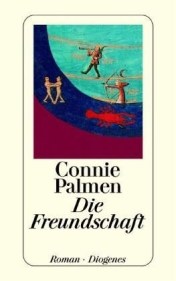
Thoughts on life, love, friendship, fear etc. from Connie Palmen’s Die Freundschaft

Connie Palmen, Die FreundschaftConnie Palmen, whose work I discovered only recently, is perhaps as much a philosopher as she is an author of fiction. Which should come as no surprise, as she studied both philosophy and Dutch literature.

Here are some quotes from Die Freundschaft:

In Worte zu fassen, was nicht unbedingt auf der Hand liegt, darin liegen für mich Glück und Befreiung.

(To put into words what is not necessarily obvious – in that for me lie happiness and liberation.)

Man wird ein bißchen irre, wenn man Tag für Tag immerzu leben muß …

(You get a little crazy, when you always have to live, day after day …)

Nicht der Haß ist das Gegenteil von Liebe, denn Haß muß man sich immer erst noch verdienen, sondern es ist diese Gleichgültigkeit.

(Not hatred is the opposite of love, for hatred you always still have to earn first – it is rather this indifference.)

Jemand, der maßlos nachdenkt, hat wahrscheinlich größere Angst vor dem Leben als andere.

(Somebody who reflects exorbitantly probably has a greater fear of life than others.)

Alle Süchte sind Versuche, die Sehnsucht nach Freundschaft aus eigener Kraft zu stillen, das heißt ohne dabei von jemand anders abhängig zu sein.

(All addictions are attempts to allay the longing for friendship out of one’s own strength, which is to say, without being dependent upon somebody else.)

Best Reads 2013 · Fiction

Best Reads 2013. I: Martin Walser, Das dreizehnte Kapitel

Martin Walser, Das dreizehnte KapitelMartin Walser’s latest novel talks about a chance meeting that leads to an intimate correspondence between a male author and a female theologian – and a love that, precisely because of its impossibility, is of the utmost intensity.

It is a poignant book about love, loss and pain. Here are some highlights:

Ich möchte nicht der sein, der ich war. Ich möchte der sein, der ich durch Dich bin.

(I do not want to be the one that I was. I want to be the one that I am through you.)

Streich das Warum.
Heiße den Schmerz willkommen.

(Erase the Why.
Welcome the pain.)

Ohne Unmögliches kann ich nicht leben. Umgeben von nichts als Möglichem erlischt das Leben selbst.

(Without the impossible I cannot live. Surrounded by nothing but the possible, life itself is extinguished.)